

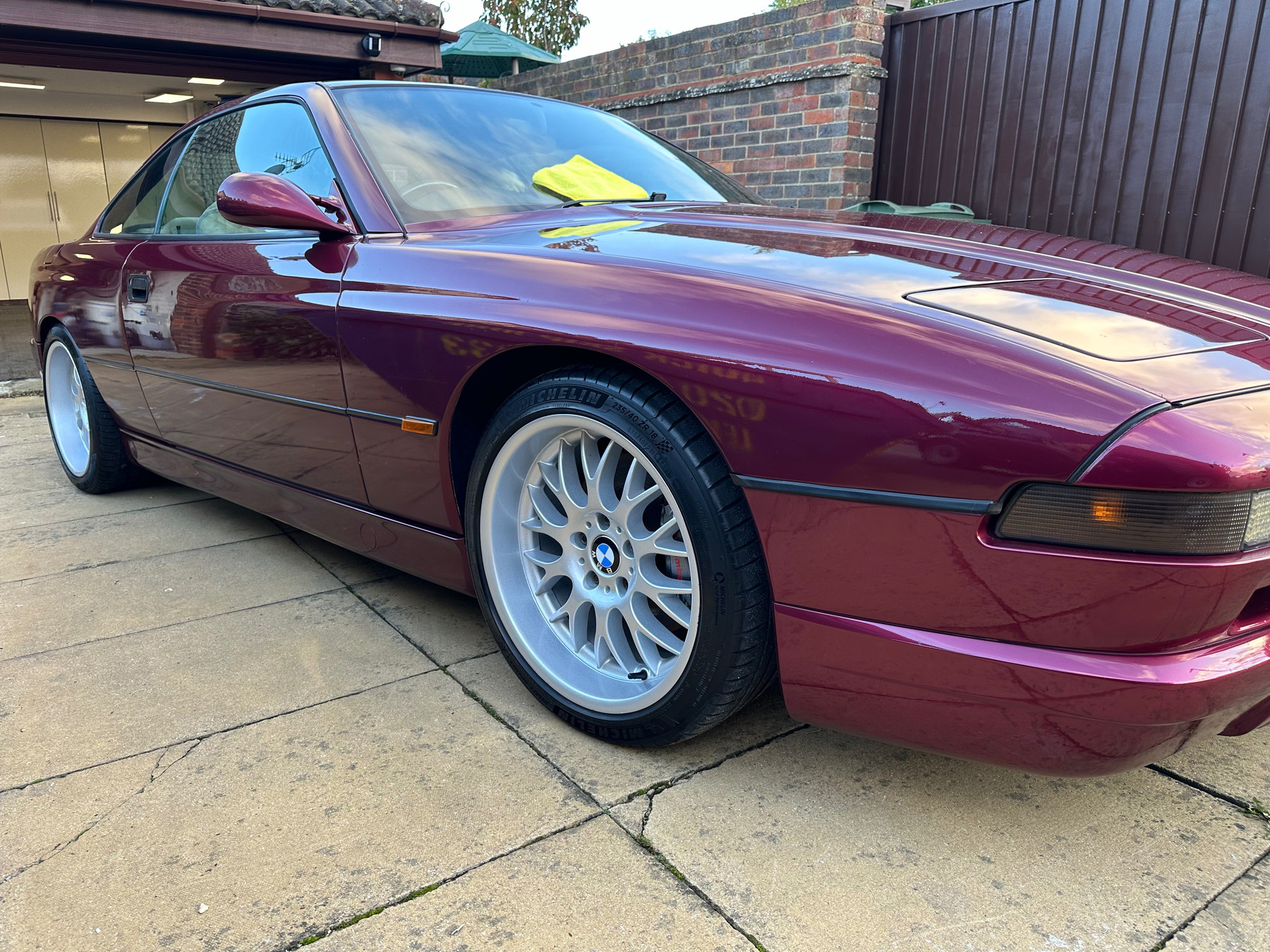
This BMW 8 Series paint correction project wasn’t about achieving a flawless finish. The challenge was improving previously resprayed paintwork while working safely within its limitations.
At QC Detailing, we recently worked on a classic BMW 8 Series whose owner was preparing to move abroad and wanted the car looking its best before putting it up for sale.
The BMW had undergone a complete respray at some point in its life, but the finish showed several problems, including excessive orange peel, swirl marks, raised touch-up repairs and areas of cracking and peeling lacquer.
With a vehicle of this age and multiple previous owners, the full history of the paintwork was unknown. That made careful assessment particularly important.
Our objective was to make a meaningful improvement to its appearance without the expense of a complete repaint.
The project took four days at our indoor workshop in Windsor.
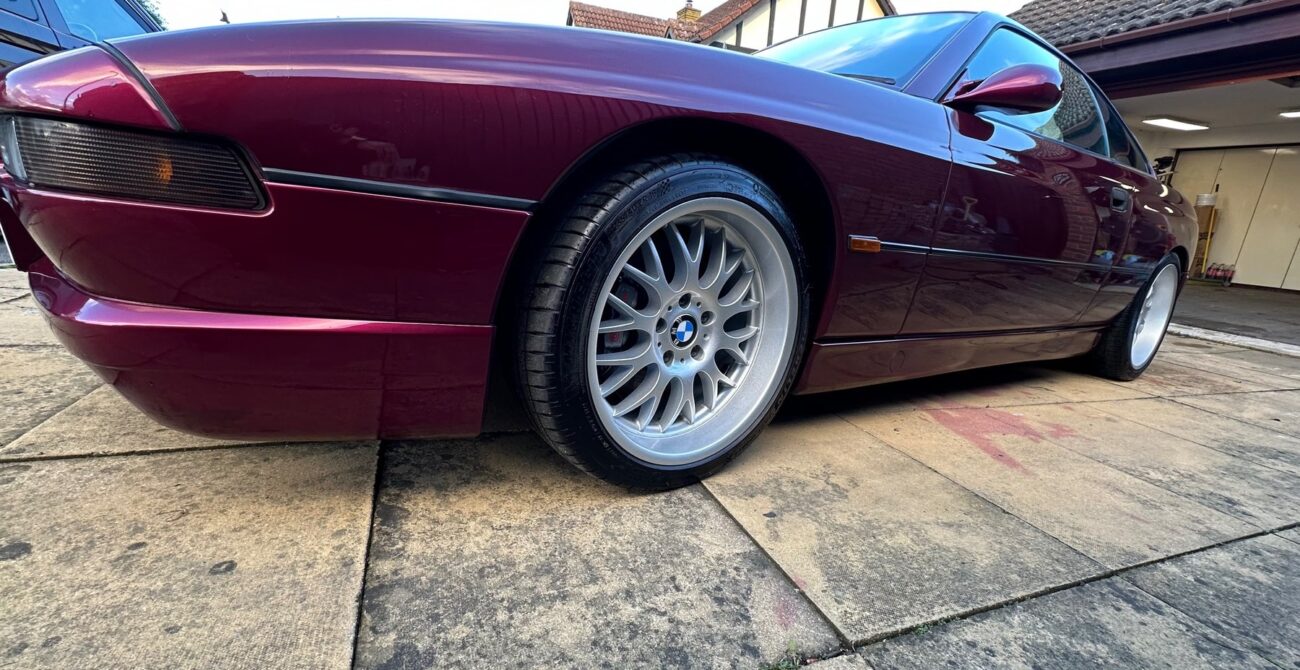
The BMW 8 Series following four days of paint correction, refinement and Gtechniq EXO ceramic coating at QC Detailing.
BMW 8 Series Paint Correction: Assessing the Previous Respray
Before beginning the correction process, we inspected the paintwork and assessed its thickness.
The entire BMW had previously been resprayed, meaning we were not dealing with its original factory paint. Although the extent of the repaint was clear, there was no reliable history of when the work had been carried out or how it had been prepared.
One of the most noticeable problems was orange peel — an uneven surface texture that distorts reflections and can reduce the visual quality of a paint finish.
The BMW also had several previous touch-up repairs. In places, the applied paint sat proud of the surrounding surface rather than blending into it.
Because the car had been resprayed, the colour of these touch-ups was also noticeably different from the surrounding paintwork.
Some areas, particularly around the bumper, had already developed cracking and peeling lacquer.
These defects could not all be treated in the same way. Some could be improved through careful sanding and polishing, while others required repainting to achieve a proper repair.
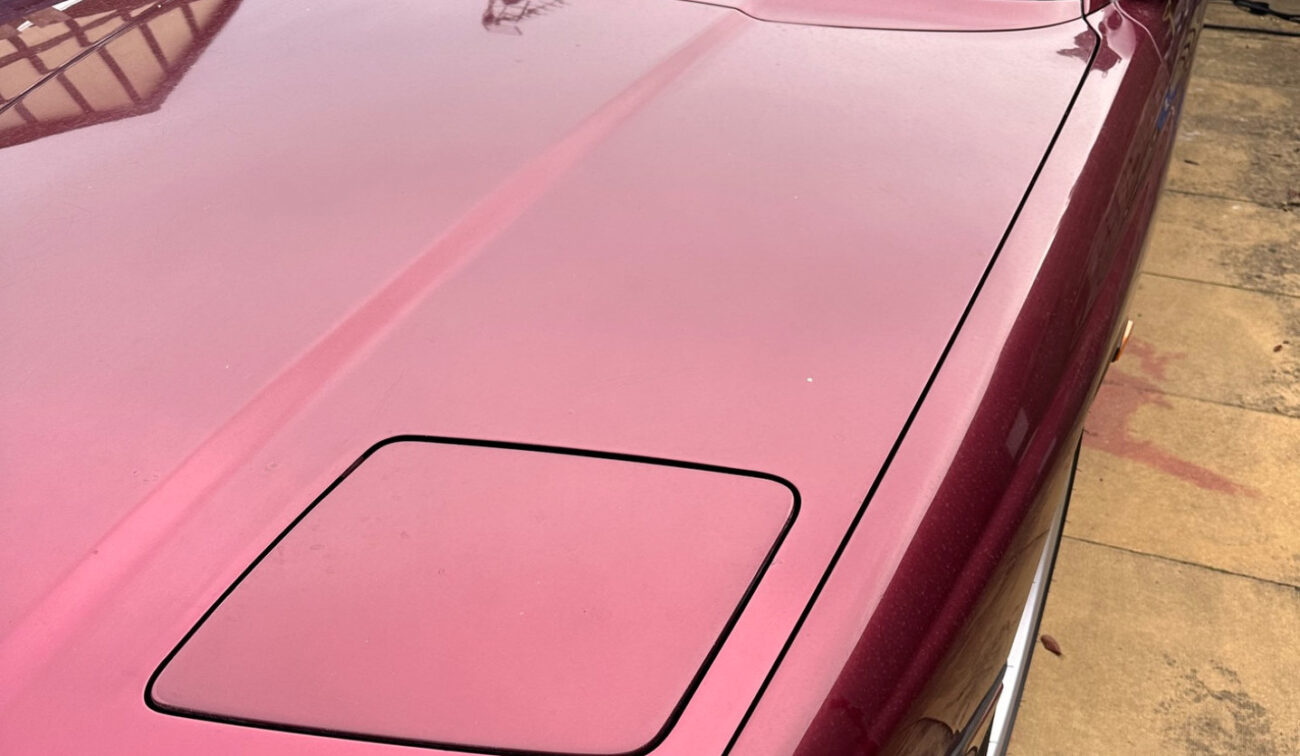
A closer look at the BMW’s previously resprayed paintwork before correction.
Selective Hand Sanding to Improve Orange Peel
Removing orange peel across an entire vehicle can be a substantial undertaking, particularly when working with paintwork of uncertain history.
For this BMW, a full orange peel removal was neither necessary nor appropriate for the customer’s budget and intended outcome.
Instead, we concentrated on selected areas where reducing the texture would make the greatest difference.
Following the paint thickness assessment, we carefully hand-sanded suitable sections using 2500 and 3000 grit abrasives.
Working by hand allowed us to address localised areas rather than unnecessarily sanding complete panels.
The aim was not to create an artificially flat finish everywhere, but to reduce excessive texture and achieve a more consistent appearance across the vehicle.
We also had to recognise the limitations of the previous respray. Further sanding is not always the right answer, particularly where the paint or lacquer is already compromised.
Improving Raised Touch-Up Paint
Another challenge involved several repairs previously attempted by the owner.
The touch-up paint had been applied above the surrounding surface, leaving raised spots that stood out against the finish.
Where suitable, we carefully levelled these areas to improve their appearance.
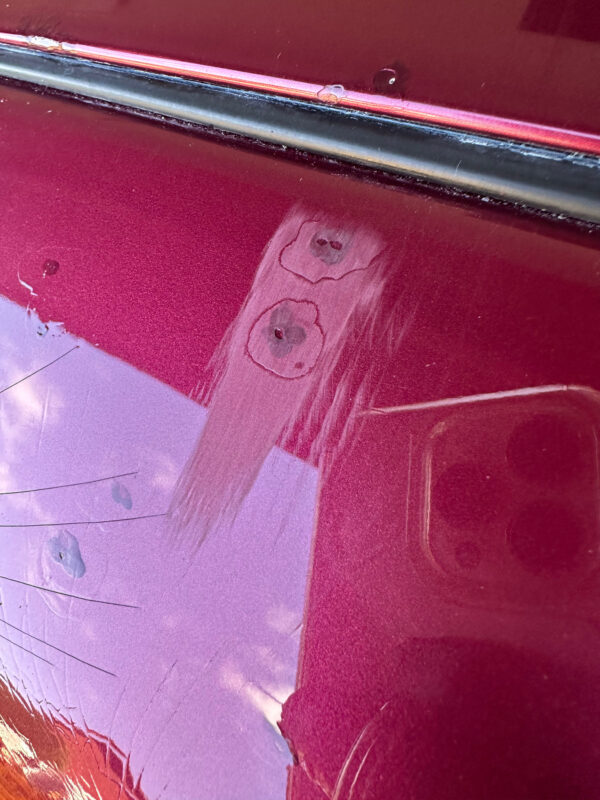
Work in progress: localised hand sanding to level raised touch-up repairs on the BMW’s previously resprayed paintwork.
However, there was an important limitation: levelling a repair cannot correct a mismatch in paint colour.
Although we managed to flatten the raised touch-ups, some remained visible as small, differently coloured spots.
There were also areas of existing lacquer cracking and peeling. In these sections, further sanding or polishing could not resolve the underlying problem and risked making the damage worse.
The bumper, in particular, would ultimately have benefited from being properly resprayed.
For a vehicle being prepared for sale, our approach was to achieve a sensible improvement without carrying out unnecessary or potentially damaging work.
Rotary Compounding and DA Paint Refinement
Following the localised sanding work, we moved on to machine polishing.
A rotary polisher and cutting compound were used to refine the sanded areas, remove sanding marks and restore clarity to the treated paintwork.
We then followed with a dual-action (DA) polisher to further refine the finish, reduce polishing haze and improve the overall gloss.
This combination helped bring greater depth and clarity back to the BMW’s burgundy paintwork.
Under inspection lighting, the improvement in surface defects and reflection quality was particularly noticeable.
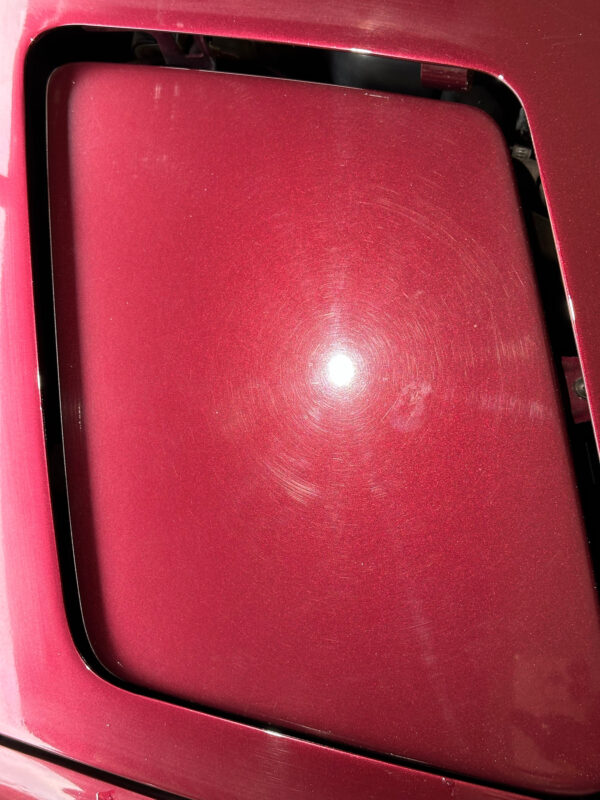
Swirl marks visible under inspection lighting before paint correction.
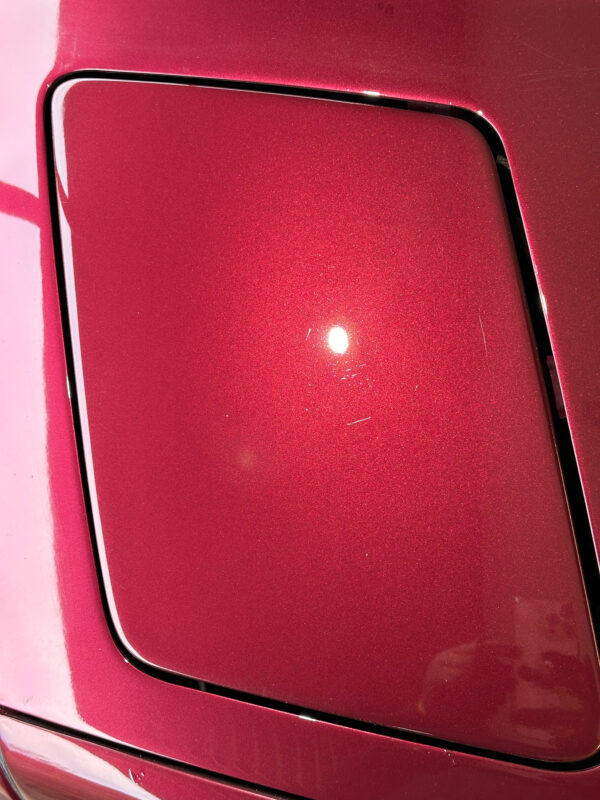
The same area after paint correction, showing improved clarity and fewer visible swirl marks.
As with the sanding process, we worked within the limitations of the existing paintwork rather than pursuing complete defect removal at any cost.
Protecting the Paintwork with Gtechniq EXO
With the correction and polishing stages completed, we applied Gtechniq EXO ceramic coating as the final paint protection treatment.
Ceramic coating helps provide a protective, water-repellent finish and can make routine cleaning and maintenance easier.
However, a coating is not a substitute for proper paint repairs. It cannot correct colour mismatches, remove orange peel or reverse failing lacquer.
That is why the preparation and correction stages are so important when deciding on an appropriate treatment.
You can learn more about our ceramic coating services and the preparation involved.
The Finished Result: A More Presentable Classic BMW
After four days of work at our indoor workshop in Windsor, the BMW 8 Series had undergone a substantial cosmetic improvement.
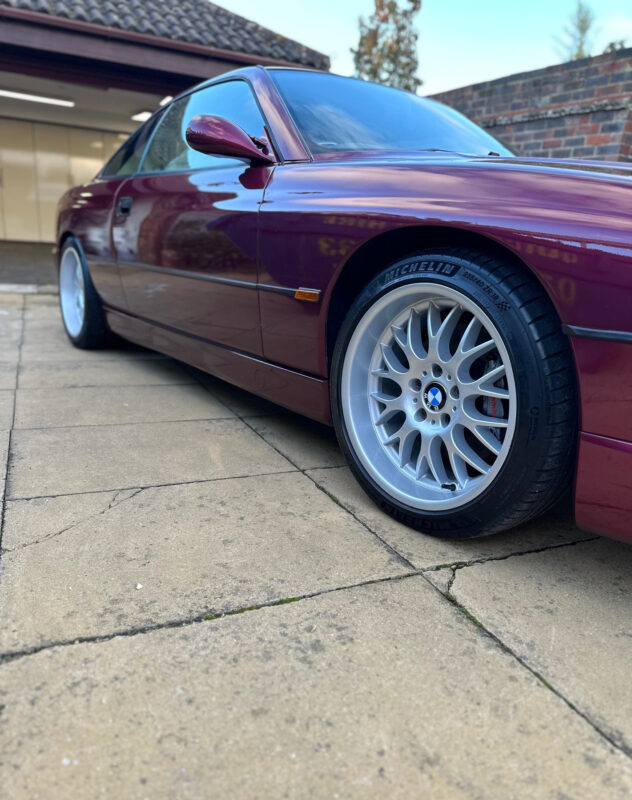
The BMW 8 Series after four days of paint correction, refinement and Gtechniq EXO ceramic coating.
The paintwork had greater gloss and clarity, selected areas of excessive texture had been reduced, and previously raised touch-ups had been levelled where it was safe to do so.
Some imperfections remained, including areas of orange peel, paint colour mismatch and deteriorating lacquer.
These were limitations of the previous paintwork, not defects that could realistically be eliminated through detailing alone.
The owner’s priority was to improve the BMW’s appearance before selling it, rather than commission an extensive repaint or a concours-level restoration.
By concentrating on the areas where professional correction could make a meaningful difference, we were able to improve the car’s presentation while keeping the work appropriate to its condition and purpose.
Paint Correction Requires the Right Approach, Not Just More Polishing
This BMW 8 Series is a good example of why every paint correction project needs an individual assessment.
Paint thickness, previous repairs, existing damage, customer expectations and budget all influence the appropriate process.
Sometimes the best result comes from intensive correction. On other occasions, particularly with older or previously resprayed vehicles, knowing when to stop is equally important.
At QC Detailing, we work with everything from everyday vehicles to cherished classics, performance cars and prestige vehicles, tailoring the process to each vehicle’s condition.
If your car has swirl marks, dull paintwork or previous repairs that need assessment, explore our professional paint correction services or contact QC Detailing to discuss what can realistically be achieved.