Everything You Need to Know About Clay Bar Treatment on Your Vehicle
Have you ever washed your car thoroughly, only to find that the paintwork still feels rough when you gently run your hand across it? This can happen when contamination becomes bonded to the paint surface and cannot be removed through ordinary washing alone.
Road grime, industrial fallout, overspray and other stubborn deposits can accumulate on vehicle paintwork over time. Even when the car looks clean, some of these contaminants may remain attached to the surface.
A clay bar treatment is one method used in professional car detailing to remove suitable bonded surface contamination and leave the paintwork feeling smoother.
However, clay barring needs to be carried out carefully. It is not a substitute for washing, polishing or paint correction, and using clay incorrectly can introduce fine marks into the finish.
In this guide, QC Detailing explains what clay bar treatment involves, when it may be useful, how it fits into exterior decontamination and what to consider before attempting it yourself.
What Is a Clay Bar Treatment?
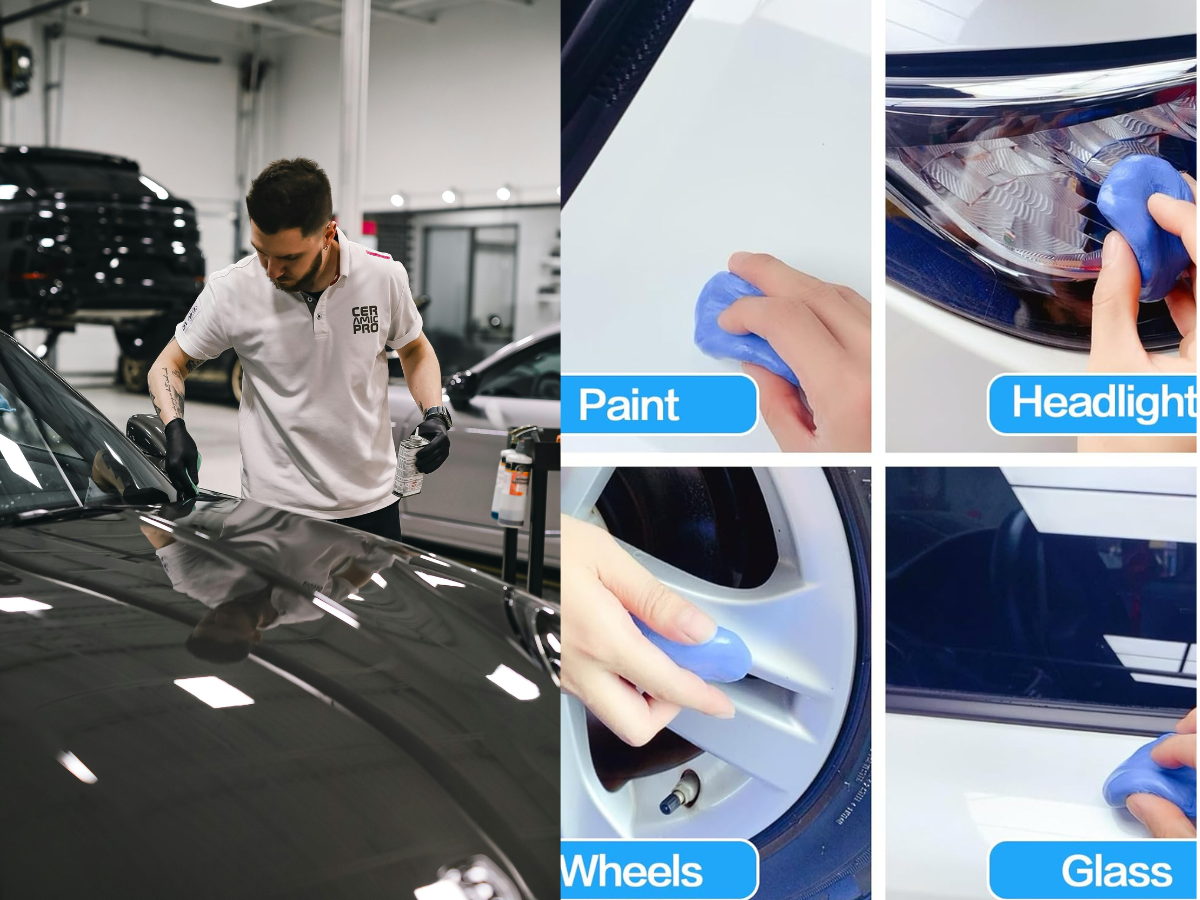
A clay bar is a specialised detailing product designed to lift certain bonded contaminants from suitable vehicle surfaces. It has a flexible, clay-like consistency and is normally used with a compatible lubricant.
Unlike routine car washing, which mainly removes loose dirt and surface grime, a clay bar can help remove contamination that remains attached to the paint after washing.
Examples can include:
- Bonded road grime and stubborn surface deposits.
- Some types of paint overspray.
- Residual contamination not removed by normal washing.
- Certain airborne deposits attached to the paint surface.
Clay treatment works on contamination attached to the surface. It does not repair scratches, remove swirl marks or correct defects within the clear coat.
Clay bars are also not the only mechanical decontamination products available. Clay mitts, towels and pads can serve a similar purpose, although their suitability and level of aggressiveness vary between products.
The correct choice depends on the condition of the paintwork, the contamination present and the level of finish required.
Benefits of Auto Clay Bar Treatment
When a vehicle has suitable bonded surface contamination, careful clay treatment can form a useful part of a wider exterior detailing process.
Removes Bonded Surface Contamination
The principal benefit of clay barring is removing contamination that remains attached to paintwork after washing.
By addressing these deposits, clay treatment can improve the smoothness of the surface and help prepare it for subsequent detailing work.
It is important to remember that iron fallout removers, tar removers and other suitable chemical treatments may be preferable for certain contaminants. Clay should not automatically be the first or only decontamination method used.
Helps Prepare Paintwork for Waxing and Ceramic Coating
Paint preparation is important when applying waxes, sealants and ceramic coatings. Remaining contamination can interfere with achieving a clean, suitable surface for protection.
Clay treatment may form part of this preparation where bonded contamination is present, usually after a thorough wash and any appropriate chemical decontamination.
However, clay barring alone does not mean that a vehicle is ready for ceramic coating. Further inspection, polishing where required and other preparation steps may be necessary according to the condition of the paintwork and the coating manufacturer’s requirements.
Read more about our professional Ceramic Coating service and how surface preparation fits into the treatment.
Improves Surface Smoothness
Bonded contaminants can leave paintwork feeling rough even after a careful wash.
Removing suitable surface deposits can create a noticeably smoother finish. This is particularly useful when preparing a vehicle for polishing or protection.
Clay barring should not be confused with paint polishing. A smoother surface does not necessarily mean scratches, oxidation or swirl marks have been corrected.
Can Support a More Thorough Exterior Detail
A professional exterior detail may involve several stages of cleaning and decontamination, depending on the vehicle’s condition.
Clay treatment is one possible stage within that wider process. It is most useful when the paint has contamination that requires mechanical removal rather than when a routine wash is sufficient.
When Should You Use a Clay Bar?
Clay barring is best considered when inspection shows that bonded contamination remains on suitable paintwork after washing.
It may also be considered during preparation for paint polishing or the application of certain protective products.
One commonly discussed way of checking paint smoothness is to gently feel a clean painted surface through a thin plastic bag. This can make small surface deposits easier to detect, although it is not a definitive test and should only be attempted carefully on clean paint.
If the surface feels rough, further assessment can help determine whether the cause is bonded contamination and which removal method is most suitable.
Not every car needs clay treatment each time it is washed or detailed. Unnecessary mechanical decontamination can create avoidable contact with the paint and may affect existing waxes, sealants or coatings.
Vehicles with delicate finishes, matte or satin paintwork, protective films or specialist coatings require particular care and product-specific guidance.
7 Steps to Automotive Clay Bar Treatment
If you are considering a DIY clay bar treatment, it is important to understand that the process involves direct contact with your vehicle’s finish. Incorrect techniques can cause marring or scratches.
The following steps provide a general overview for suitable conventional gloss paintwork. Always follow the instructions supplied with your chosen products.
Requirements for Clay Bar Cleaning
- Suitable car shampoo and washing equipment.
- Clean water for rinsing.
- A compatible automotive clay bar or clay treatment product.
- Clay lubricant recommended for that product.
- Clean, soft microfibre towels.
- Appropriate chemical decontamination products where needed.
- A shaded working area away from hot surfaces and direct sunlight.
Step-by-Step Instructions for Using a Clay Bar on a Car
- Wash the vehicle thoroughly. Remove loose dirt, grit and road grime using suitable washing methods. Rinse carefully before any clay treatment. Do not use clay on a dirty surface.
- Assess the remaining contamination. Inspect the paintwork for bonded deposits. Where appropriate, use compatible iron fallout or tar removal products according to their instructions before deciding whether mechanical decontamination is necessary. Rinse away chemical products as directed.
- Prepare the clay and lubricant. Use a clean piece of clay and a compatible lubricant. Follow the product instructions for preparation, and never use clay that has become contaminated with grit or debris.
- Start with a small test area. Choose a suitable, clean section of paintwork and apply the recommended amount of lubricant. Gently test the process before continuing across larger areas.
- Work carefully in small sections. Move the clay with light pressure using short, controlled strokes. Keep the surface adequately lubricated and never force the clay across the paint. If it catches or drags, stop and reassess.
- Inspect and maintain the clay. Check the clay frequently for contamination and expose a clean working surface as directed. If a conventional clay bar falls onto the ground or picks up grit, discard it rather than risk scratching the paintwork.
- Remove residue and inspect the finish. Follow the product instructions for removing lubricant residue, which may involve wiping or rinsing. Inspect the surface for remaining contamination and any marring before deciding whether polishing or additional preparation is required.
Clay barring can introduce light surface marring, particularly on softer paints or when using more aggressive products. Paint polishing may be appropriate afterwards, depending on the finish and the customer’s requirements.
If your vehicle has visible swirl marks, scratches or other paint defects, learn more about our professional Paint Correction service.
How Does Clay Barring Fit Into Exterior Decontamination?
A clay bar treatment is one part of exterior decontamination, but the two terms do not mean exactly the same thing.
A more comprehensive exterior decontamination process can include a thorough pre-wash and hand wash, followed by appropriate chemical treatments to address contamination such as iron fallout and tar.
Mechanical decontamination using a clay bar or similar product may then be considered where suitable bonded deposits remain.
The appropriate order and methods depend on the vehicle, the products being used and the condition of the finish.
QC Detailing offers exterior cleaning and decontamination treatments tailored to the vehicle’s requirements. These can be discussed separately from interior cleaning, paint correction or ceramic coating.
Contact the Professionals at QC Detailing
Clay bar treatment may look straightforward, but the condition of the paintwork and the type of contamination make a significant difference to how it should be approached.
At QC Detailing, we assess vehicle surfaces before selecting suitable cleaning and preparation methods. Our professional detailing services can include exterior decontamination, paint correction and paint protection, depending on what your vehicle needs.
We serve customers across Hounslow, Isleworth, West London, Windsor, Berkshire and suitable surrounding areas.
Explore our professional Car Detailing Services or contact QC Detailing for advice and a tailored quotation.
Clay Bar Treatment: Key Points
- Clay treatment helps remove certain bonded contaminants that remain after washing.
- It is a mechanical decontamination method, not a form of paint correction.
- Appropriate iron fallout and tar removers may reduce the need for mechanical treatment.
- Suitable lubrication and careful technique help reduce the risk of marring, but do not eliminate it.
- Clay treatment may be useful before polishing or paint protection where contamination is present.
- The frequency of treatment should depend on the vehicle’s condition rather than a fixed schedule.
- Specialist paint finishes, films and existing coatings require additional precautions.
Frequently Asked Questions About Clay Bar Treatment for Cars
Are Synthetic Clay Bars Good for Cars?
Clay bars can be useful for removing suitable bonded surface contamination from conventional automotive paintwork. However, they must be used correctly, with compatible lubrication and appropriate care. They are not completely risk-free, and aggressive or unnecessary clay treatment can mark the finish.
Can You Clay Bar Your Windscreen?
Some automotive clay products are suitable for certain glass surfaces, including windscreens, when used according to the manufacturer’s instructions. However, suitability depends on the product and the glass surface. Existing glass coatings, films and specialist treatments may require different methods. Never assume that a product suitable for painted panels is automatically suitable for every type of glass.
Can I Keep Using a Dropped Clay Bar?
A conventional clay bar that has fallen onto the ground should be discarded because it can collect grit and debris. Reusing contaminated clay creates a significant risk of scratching the paintwork. Follow the specific cleaning and replacement instructions for reusable synthetic clay mitts or pads.
Do You Clay Bar Before or After Washing?
Clay treatment should only be considered after the vehicle has been thoroughly washed and rinsed. Appropriate chemical decontamination may also be carried out first to reduce the amount of bonded contamination requiring mechanical removal.
Will a Clay Bar Damage My Clear Coat?
A clay bar is designed to remove bonded surface contamination rather than deliberately remove clear coat material. Nevertheless, the mechanical contact can cause fine scratches or marring, particularly when the clay or surface contains grit, lubrication is inadequate or excessive pressure is used.
If you are uncertain about the condition of your paintwork, professional assessment is advisable before attempting clay treatment.
How Often Should I Clay Bar My Car?
There is no universal schedule. Some vehicles accumulate bonded contaminants faster than others due to driving conditions, storage and environmental exposure.
Clay treatment should be based on inspection and actual need rather than performed automatically every month or twice a year. If the paintwork is clean and smooth, additional clay treatment may provide little benefit.
Does Clay Barring Remove Scratches or Swirl Marks?
No. Clay treatment removes suitable bonded surface contamination; it does not correct scratches or swirl marks in the paint finish. Those defects may require polishing or professional paint correction. In some cases, clay treatment itself can leave light marring that requires subsequent polishing.
Do I Need to Clay Bar My Car Before Ceramic Coating?
Mechanical decontamination may be appropriate before ceramic coating if bonded contamination remains on the paintwork. However, clay barring is not automatically required on every vehicle, and it is only one possible step in the preparation process.
The complete preparation process depends on the paint condition, any existing protection and the requirements of the coating being applied.
For professional advice on exterior preparation and protection, visit our Ceramic Coating service page or contact QC Detailing.